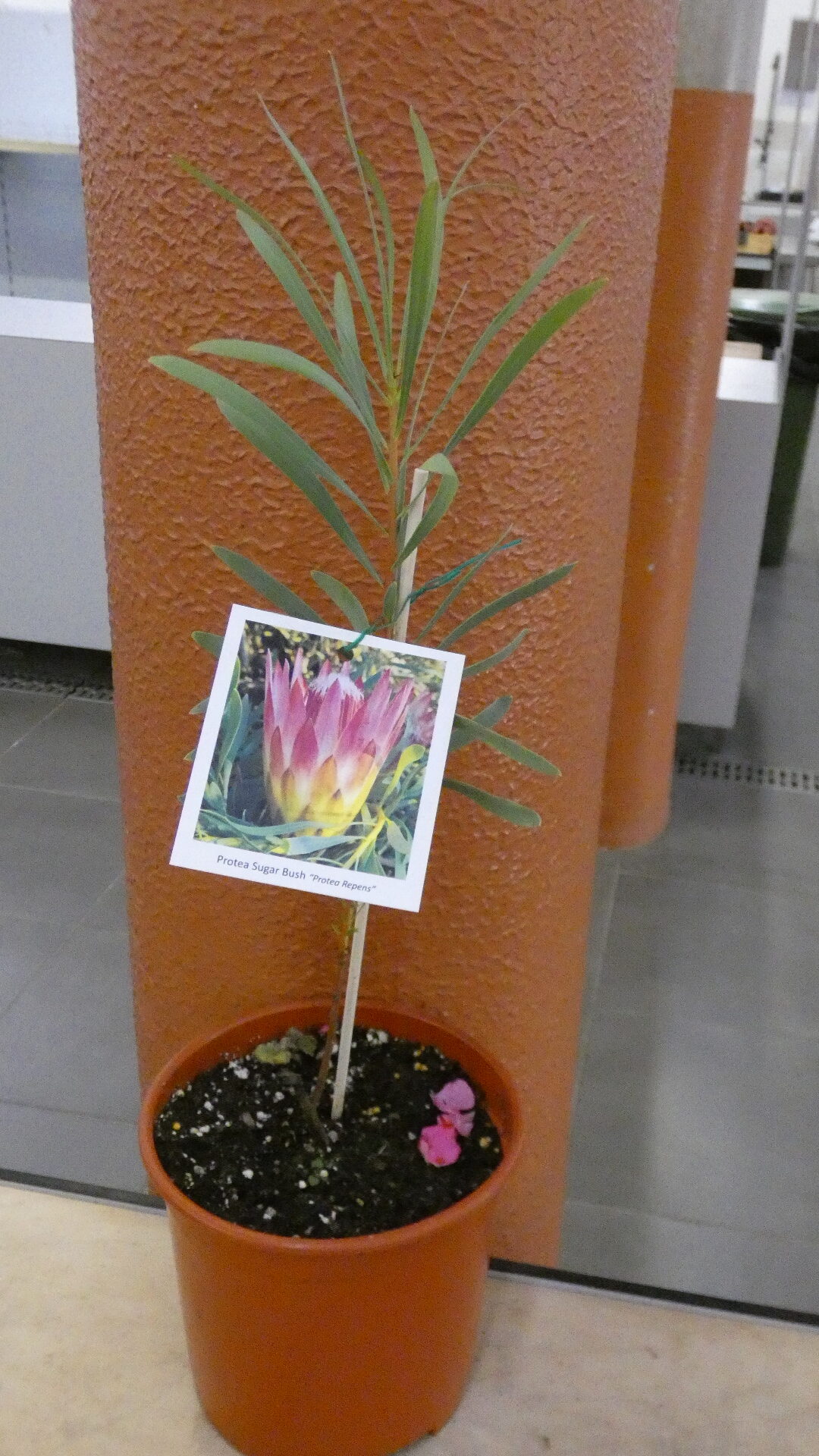
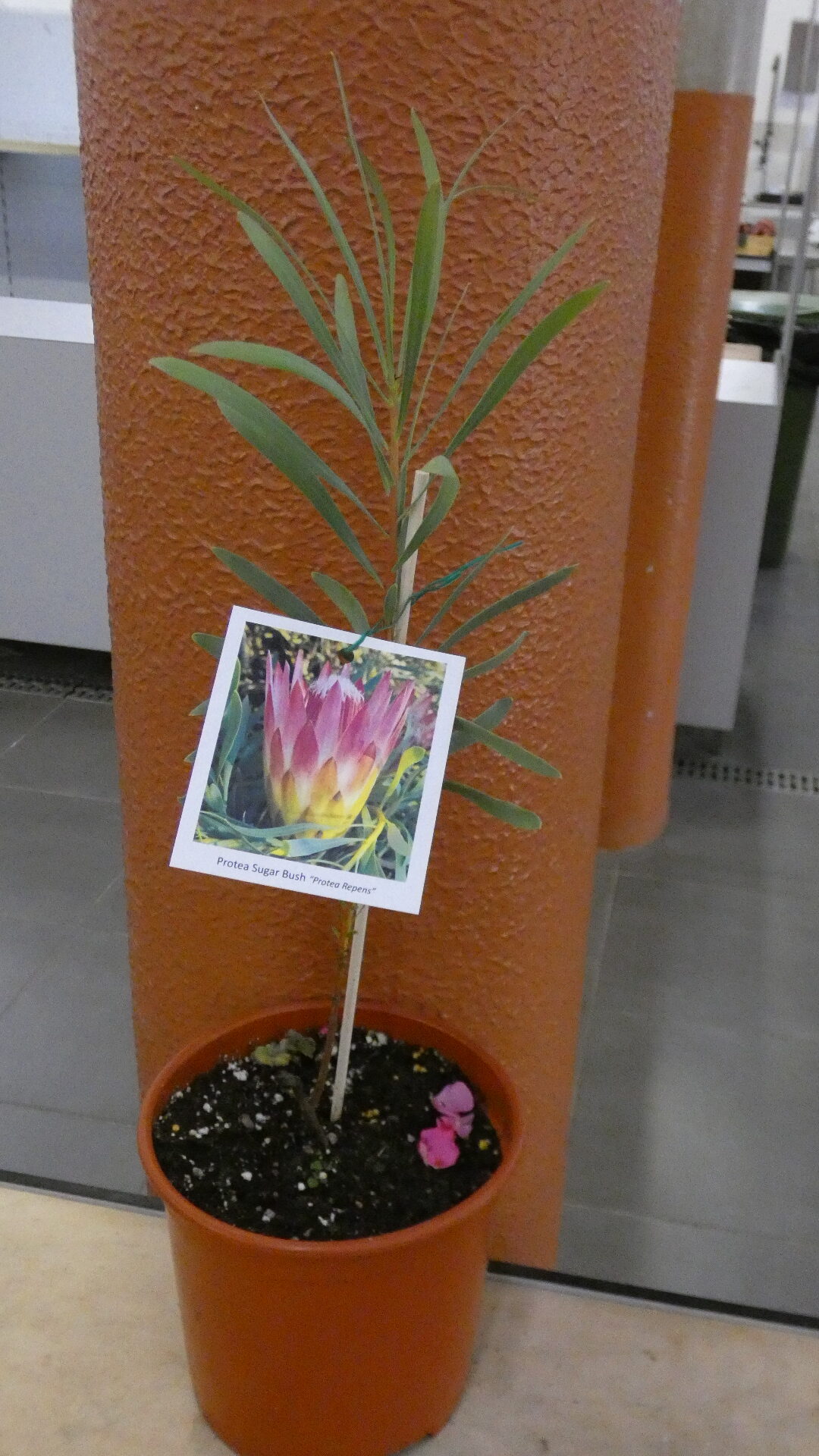
Protea repens, known as “Sugar Bush,” is the most common and emblematic species of the genus Protea, famous for its nectar-rich flowers and for being the type species of the genus.
Origin and family: Native to the Cape region of South Africa (fynbos), belonging to the Proteaceae family — it is considered the most representative and widely distributed species of the genus Protea.Size: Medium to large shrub, reaching between 1 and 3 m in height, with erect and branched growth.Foliage: Leathery, linear to lanceolate, greyish-green leaves, densely arranged along the branches.Flowering: Produces cup-shaped inflorescences, with cream to light pink bracts, sometimes with reddish margins...Origin and family: Native to the Cape region of South Africa (fynbos), belonging to the Proteaceae family — it is considered the most representative and widely distributed species of the genus Protea.
Size: Medium to large shrub, reaching between 1 and 3 m in height, with erect and branched growth.
Foliage: Leathery, linear to lanceolate, greyish-green leaves, densely arranged along the branches.
Flowering: Produces cup-shaped inflorescences, with cream to light pink bracts, sometimes with reddish margins, and a fringe of dark hairs at the top. The flowers produce a large amount of nectar, which gave rise to the popular name "Sugar Bush" — traditionally used by local populations to make a syrup ("bossiestroop"). It blooms mainly in winter and early spring.
Hardiness: Tolerates light frosts, typically down to around -4°C to -5°C, adapted to Mediterranean climates.
Sun exposure: Requires full sun.
Watering: Moderate, with good drainage — very sensitive to waterlogging.
Soil: Acidic soils (pH between 5 and 6), poor in nutrients, sandy and well-drained; does not tolerate calcareous/alkaline or heavy soils.
Fertilization: Phosphorus-free fertilizer, like other Proteaceae.
Use: Very important ecologically (attracts birds and pollinating insects), used as an ornamental garden plant and also as a cut flower, although with less durability than other hybrid varieties such as 'Pink Ice'.