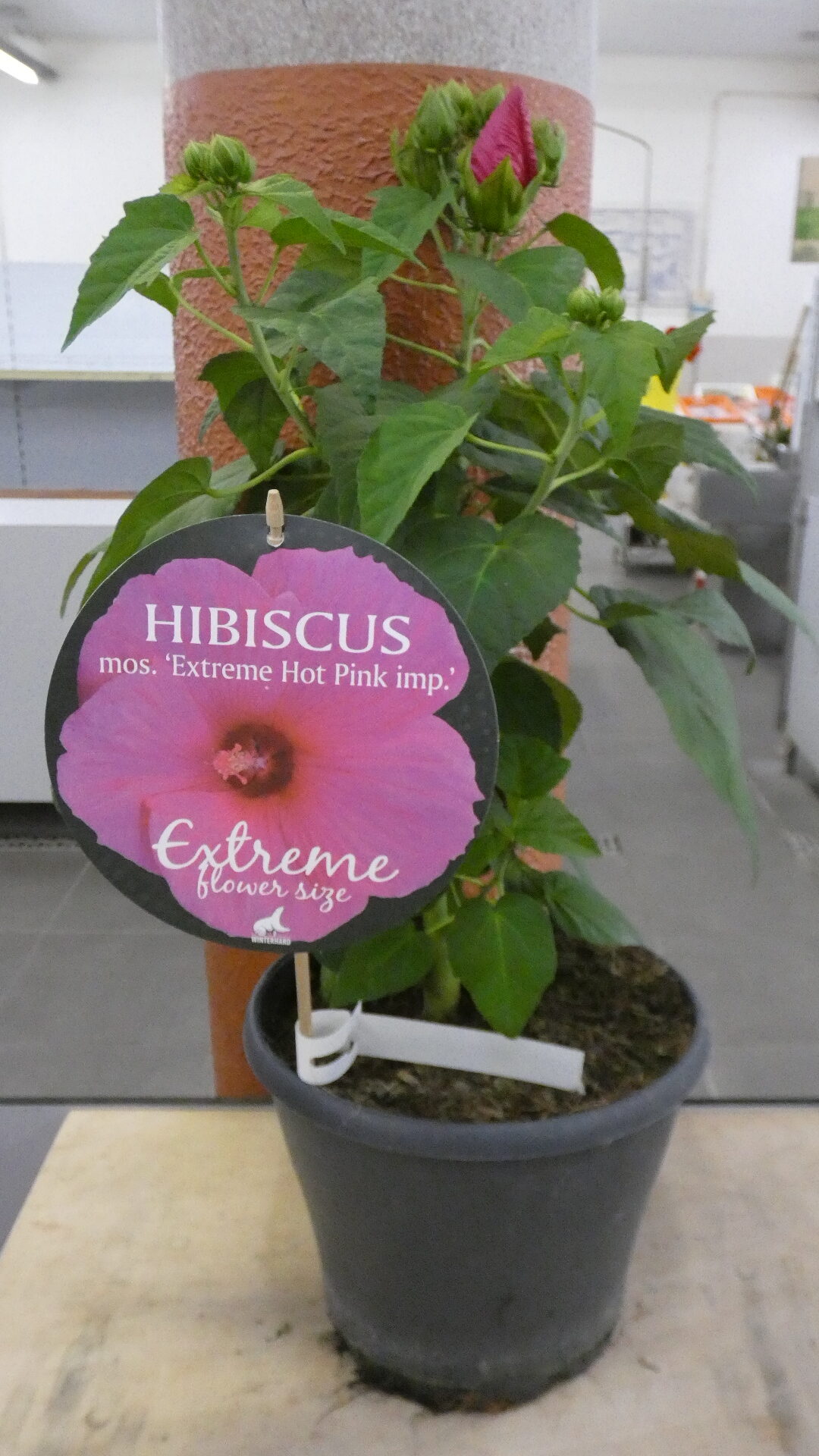
Origin and species: Belongs to the Hibiscus moscheutos group (also called "swamp rose mallow" or herbaceous hibiscus), originating from humid areas of eastern and central North America, unlike the more common tropical Hibiscus rosa-sinensis.
Plant type: Perennial herbaceous plant, woody at the base — in most climates, the aerial part dries out in winter and sprouts again from the root the following spring (hence the "winterhard"/cold-resistant indication on the label).
Size: Typically reaches between 0.8 and 1.2 m in height, with an upright and rounded growth habit.
Foliage: Green, broad, heart-shaped or lobed leaves with a smooth texture.
Flowering: The great attraction of this variety — extremely large flowers (which can exceed 20-25 cm in diameter, hence "Extreme Flower Size"), in a bright pink/intense magenta tone, with a darker center. It blooms from summer to early autumn, with flowers that typically last only one day each, but follow one another continuously throughout the season.
Hardiness: Quite resistant to cold—it can withstand frosts and harsh winters, as the plant sprouts again from the base/root even if the aerial part dries out.
Sun exposure: Prefers full sun for abundant flowering, although it tolerates some light shade.
Watering: Likes consistently moist soil—unlike many hibiscus, it tolerates (and even appreciates) wetter soils or soils near water.
Soil: Fertile, rich in organic matter, with good water retention.
Fertilization: Benefits from regular fertilization during the growing season to support abundant flowering.
Use: Ideal for flower beds, borders, near ponds/wet garden areas, or in a large pot, being a true focal point of the summer garden thanks to the exceptional size of the flowers.