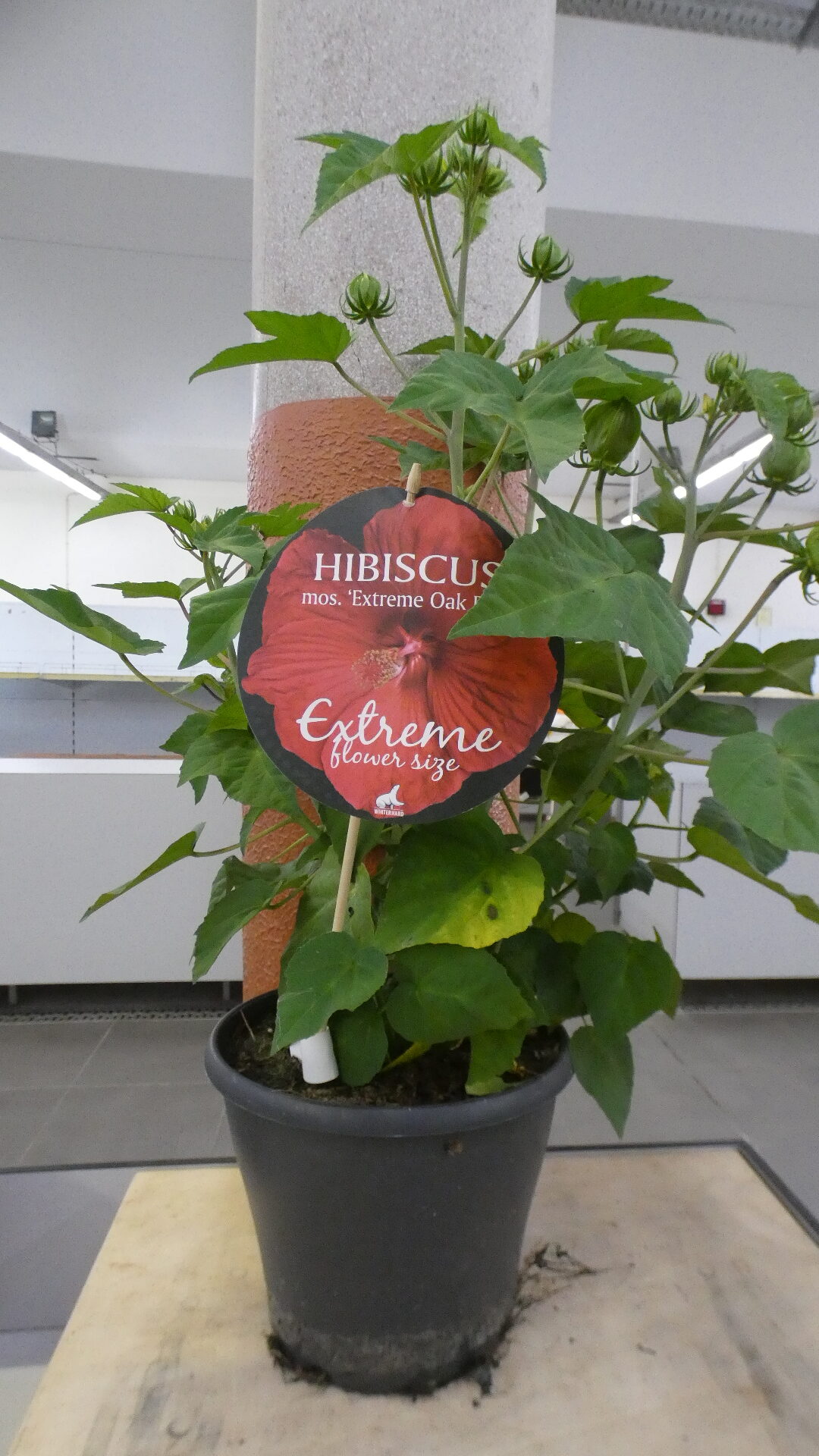
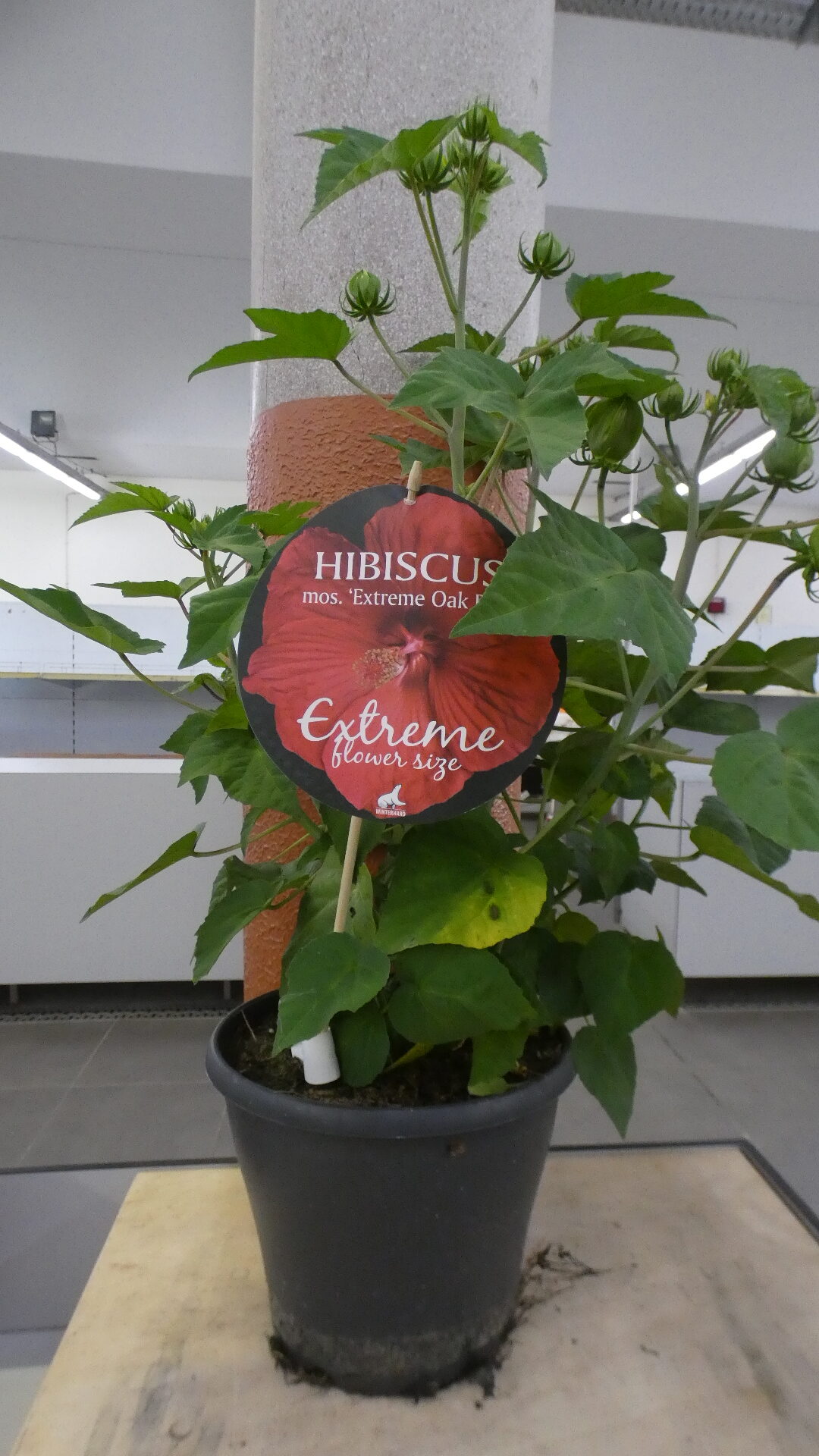
Origin and species: Belongs to the Hibiscus moscheutos group ("swamp hibiscus"), originating from the southeastern United States, of the Malvaceae family.Plant type: Perennial herbaceous plant — the aerial part dries out in winter and sprouts again from the crown/root the following spring, which makes it quite hardy despite its exotic appearance.Size: Forms a vigorous, upright and branched clump, reaching between 1 and 1.2 m in height by 70-90 cm in width.Foliage: A very distinctive trait of this...Origin and species: Belongs to the Hibiscus moscheutos group ("swamp hibiscus"), originating from the southeastern United States, of the Malvaceae family.
Plant type: Perennial herbaceous plant — the aerial part dries out in winter and sprouts again from the crown/root the following spring, which makes it quite hardy despite its exotic appearance.
Size: Forms a vigorous, upright and branched clump, reaching between 1 and 1.2 m in height by 70-90 cm in width.
Foliage: A very distinctive trait of this variety — green, deciduous, deeply lobed/cut leaves, similar to oak leaves (hence the name "Oak Red"), decorative even before flowering.
Flowering: From July to October, it produces very large red flowers, which can exceed 25-30 cm in diameter in some cases, with a darker center characteristic of hibiscus.
Hardiness: Quite resistant to cold, tolerating frosts and temperatures down to about -12°C once established (there are reports of resistance down to -15°C).
Sun exposure: Prefers full sun to partial shade.
Watering: Needs regular watering — likes cool to moist, but well-drained soil (sensitive to root rot in waterlogged soil).
Soil: Rich, deep, indifferent to limestone, with good moisture retention capacity.
Use: Perfect as a focal point in sunny flowerbeds, near water, or in a large terrace pot; combines well with ornamental grasses and other sun-loving perennials such as salvias, gauras, or echinaceas.