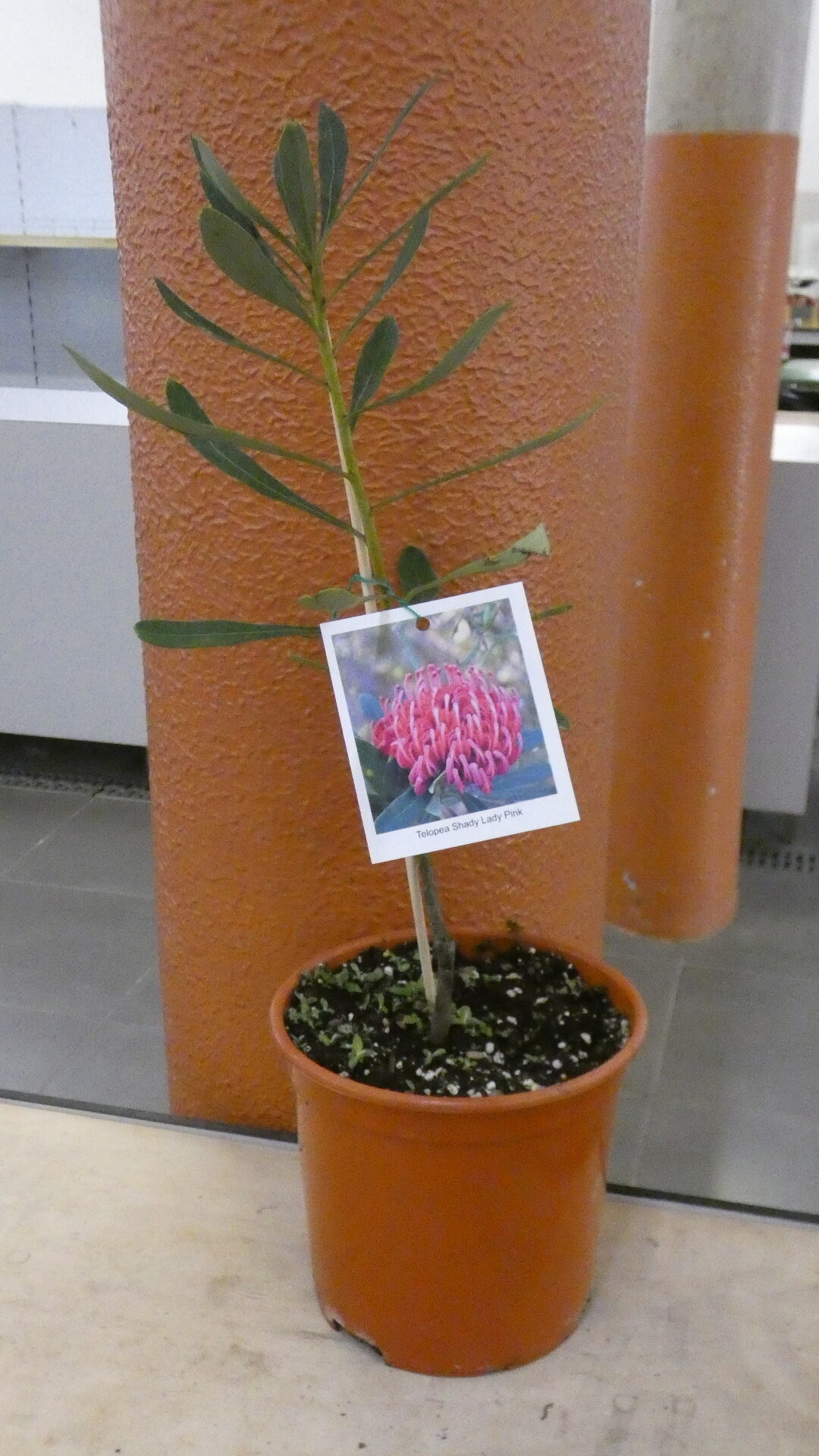
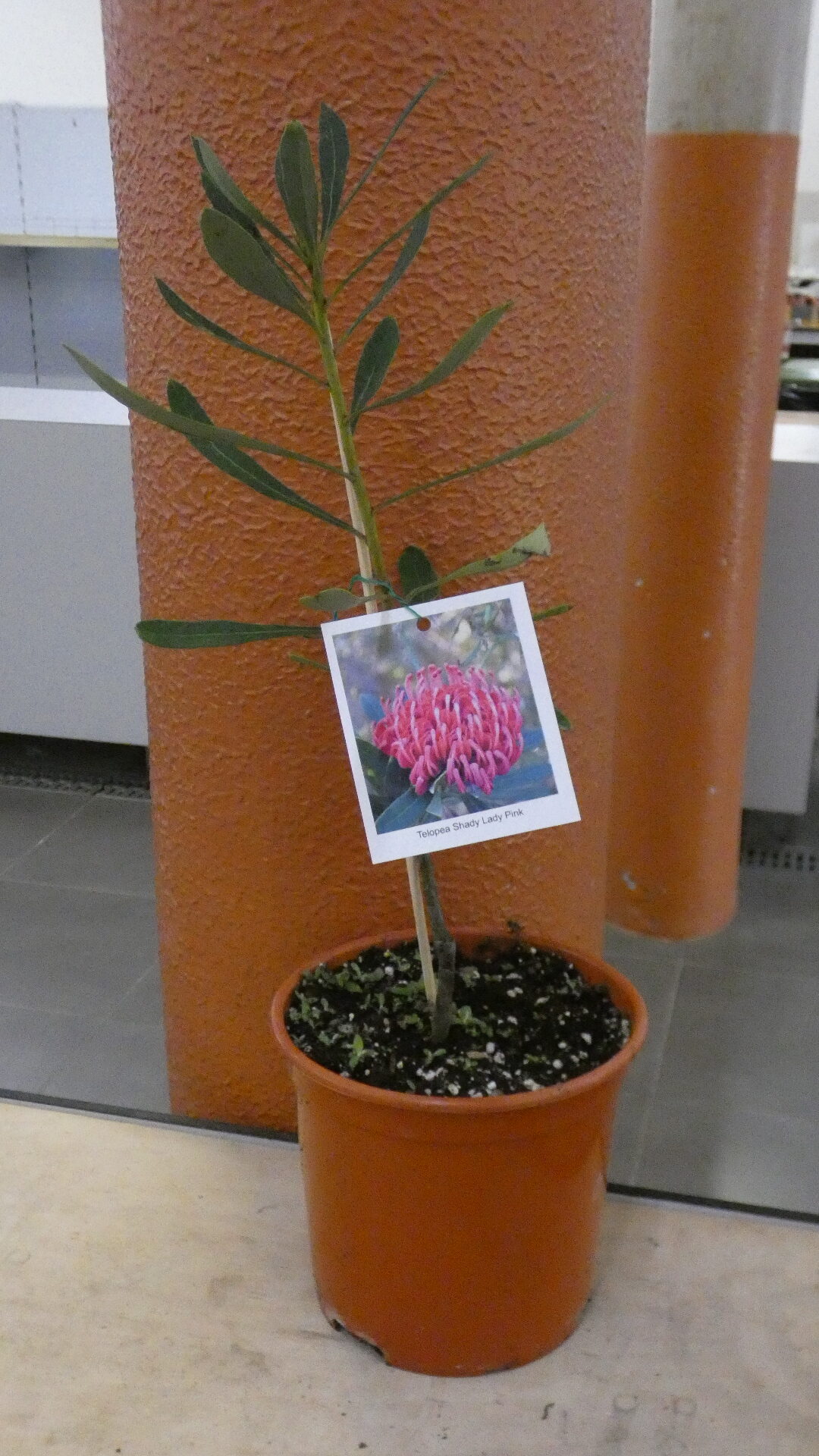
Origin and family: Genus Telopea, native to southeastern Australia, belonging to the Proteaceae family — the same as Leucadendron, Leucospermum, and Protea.Size: Medium to large shrub, reaching between 2 and 4 m in height, with erect and somewhat woody growth.Foliage: Dark green, leathery, elongated leaves with slightly serrated edges, very decorative even outside the flowering season.Flowering: Produces large, globose inflorescences (of the "waratah flower" type), consisting of dozens of small, clustered...Origin and family: Genus Telopea, native to southeastern Australia, belonging to the Proteaceae family — the same as Leucadendron, Leucospermum, and Protea.
Size: Medium to large shrub, reaching between 2 and 4 m in height, with erect and somewhat woody growth.
Foliage: Dark green, leathery, elongated leaves with slightly serrated edges, very decorative even outside the flowering season.
Flowering: Produces large, globose inflorescences (of the "waratah flower" type), consisting of dozens of small, clustered flowers, surrounded by showy bracts. In the 'Shady Lady Pink' variety, the predominant color is pink, usually in spring.
Hardiness: Tolerates light frosts, but is sensitive to prolonged intense cold — normally resists temperatures close to -4°C to -5°C, similar to other Proteaceae.
Sun exposure: Prefers full sun to light partial shade.
Watering: Moderate, with good drainage — does not tolerate waterlogging or heavy soil.
Soil: Acidic soils (pH between 5 and 6), light, well-drained; sensitive to calcareous/alkaline soils.
Fertilization: Phosphorus-free fertilizer is recommended, as with other Proteaceae, since this family is particularly sensitive to excess of this nutrient.
Use: Highly valued as a focal point in gardens, and also as a cut flower due to its great durability and decorative effect. It is considered the state flower of New South Wales, Australia.