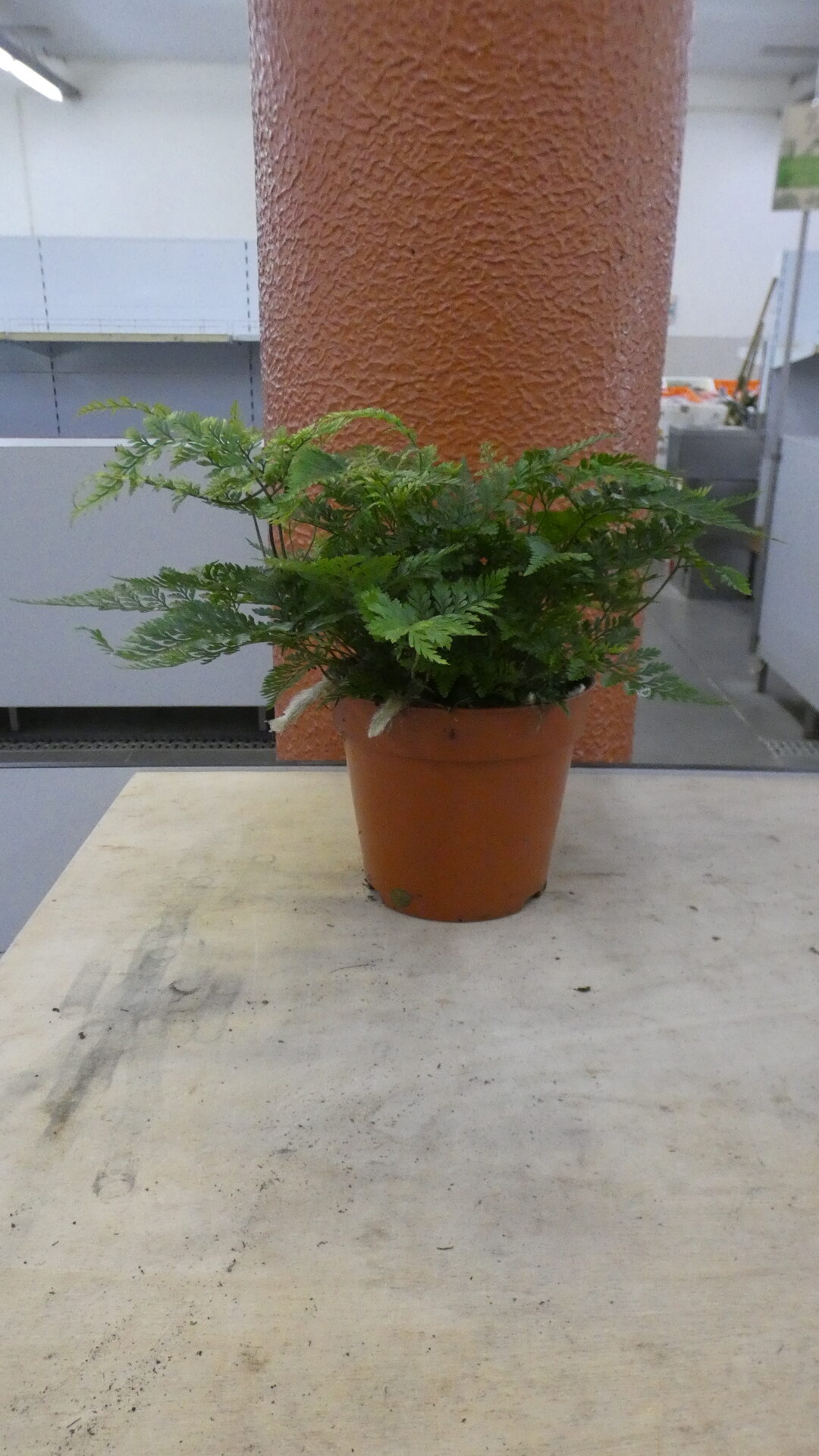
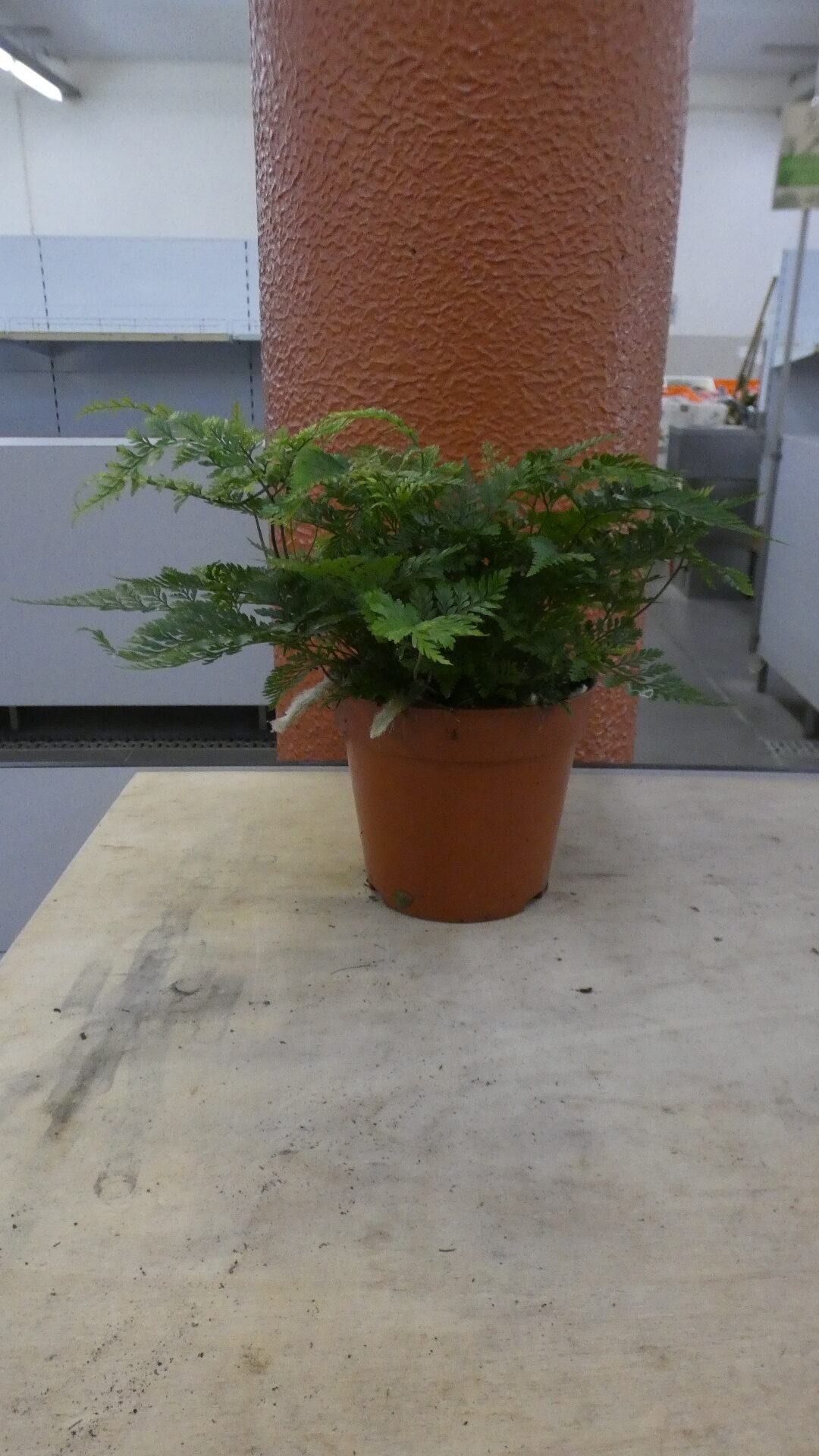
Origin and group: Ferns are very ancient plants (pteridophytes), without flowers or seeds, that reproduce by spores. There are numerous genera and ornamental species (Nephrolepis, Davallia, Asplenium, Adiantum, Polystichum, among others), cultivated as decorative foliage plants.Size: They usually form compact and arching clumps, with leaves (fronds) that grow from a central rhizome or basal clump.Foliage: Finely divided fronds, with a smooth texture and lacy/plumping appearance, in a bright green...Origin and group: Ferns are very ancient plants (pteridophytes), without flowers or seeds, that reproduce by spores. There are numerous genera and ornamental species (Nephrolepis, Davallia, Asplenium, Adiantum, Polystichum, among others), cultivated as decorative foliage plants.
Size: They usually form compact and arching clumps, with leaves (fronds) that grow from a central rhizome or basal clump.
Foliage: Finely divided fronds, with a smooth texture and lacy/plumping appearance, in a bright green tone, which give a very decorative and "airy" effect.
Exposure: They prefer shady or semi-shady locations — they do not tolerate strong direct sun, which burns the leaves.
Watering: They like constant moisture in the substrate, but without waterlogging; they are sensitive to dry air, benefiting from regular indoor misting.
Soil/Substrate: Rich in organic matter, light and well-drained, slightly acidic.
Temperature: Most do not tolerate frost or intense cold — many ferns are grown as houseplants or outdoors in protected areas in mild climates.
Use: Widely used as decorative potted plants indoors, on shady balconies, or as ground cover in shady gardens; also common in floral arrangements as accompanying foliage.