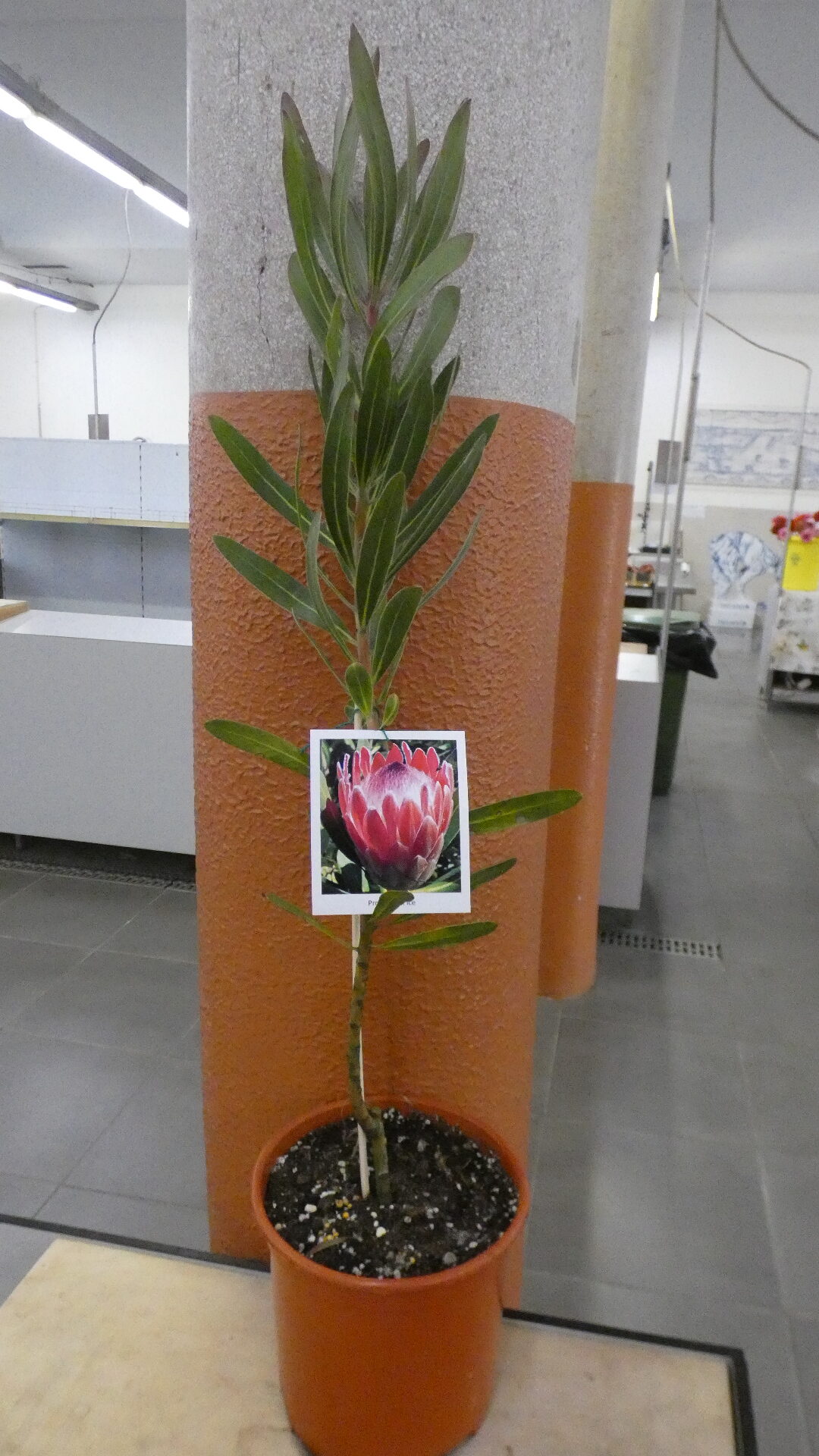
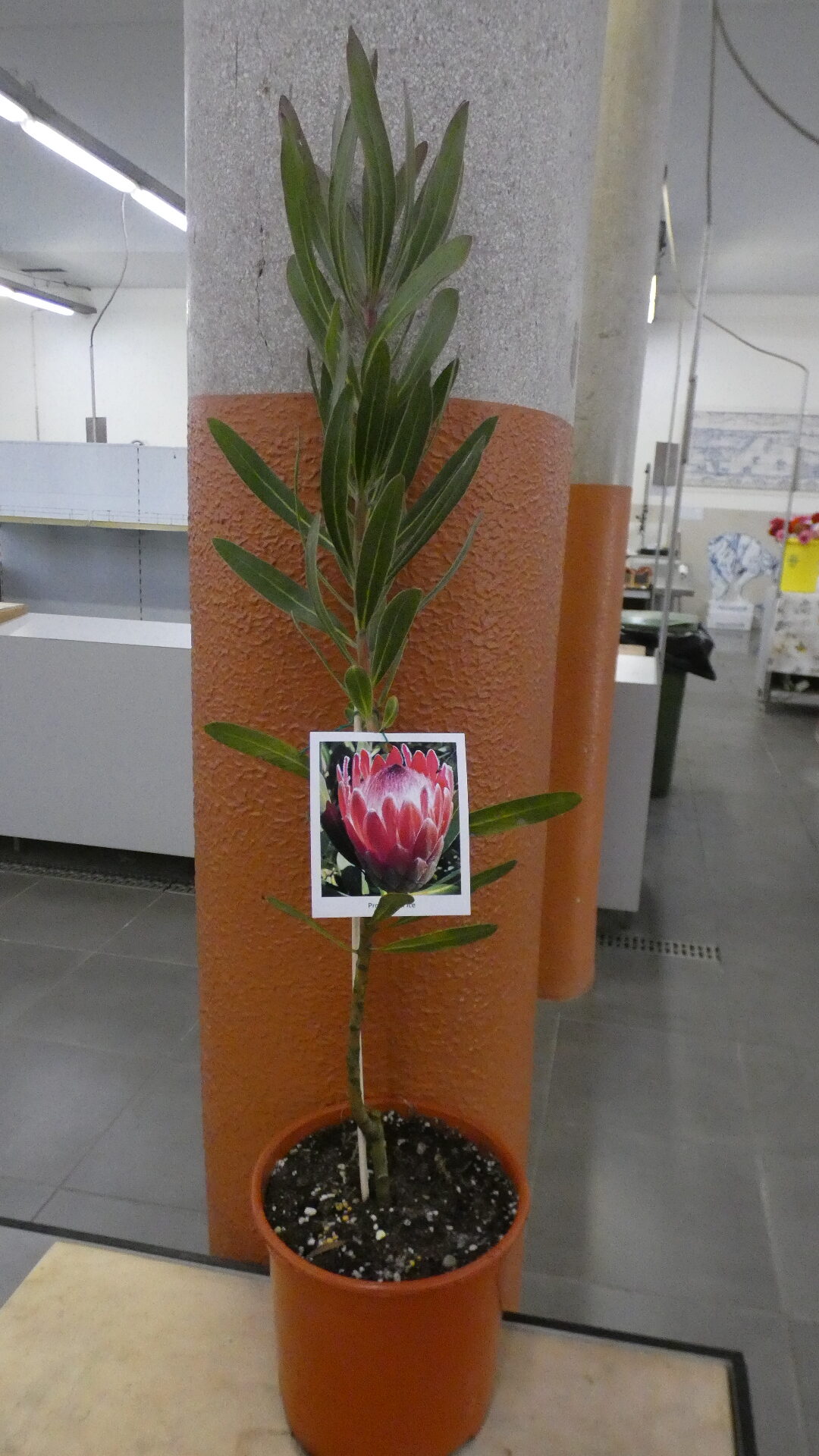
Origin and family: Hybrid resulting from the cross between *Protea compacta* and *Protea susannae*, originating from the Cape region, South Africa, belonging to the Proteaceae family.Size: Medium-sized shrub, usually between 1.5 and 2.5 m tall, with compact and dense growth.Foliage: Leathery, greyish-green, elongated and rigid leaves, very resistant.Flowering: Produces large inflorescences (flower heads) with light to medium pink bracts, sometimes with darker/velvety tones in the center, surrounded...Origin and family: Hybrid resulting from the cross between *Protea compacta* and *Protea susannae*, originating from the Cape region, South Africa, belonging to the Proteaceae family.
Size: Medium-sized shrub, usually between 1.5 and 2.5 m tall, with compact and dense growth.
Foliage: Leathery, greyish-green, elongated and rigid leaves, very resistant.
Flowering: Produces large inflorescences (flower heads) with light to medium pink bracts, sometimes with darker/velvety tones in the center, surrounded by characteristic small white hairs that give it an "icy" appearance (hence the name "Pink Ice"). It blooms mainly between autumn and spring.
Hardiness: Tolerates light frosts, usually down to about -4°C, but is sensitive to intense and prolonged cold.
Sun exposure: Requires full sun for good development and abundant flowering. Irrigation: Moderate, with good drainage very sensitive to waterlogging and excess water.
Soil: Acidic soils (pH between 5 and 6), light, sandy and well-drained; does not tolerate calcareous/alkaline or heavy/compacted soils.
Fertilization: Phosphorus-free fertilizer, like other Proteaceae, which are particularly sensitive to this nutrient.
Use: One of the most commercially cultivated Proteas as a cut flower due to its great durability (weeks in a vase); also widely used as a prominent ornamental plant in Mediterranean-style gardens.